Message from Nyx: Mother Night

I recently did a storytelling on Nyx as part of a three-year training I am currently doing at the Anima Mundi School. Nyx is the Greek personification of the night, one of the primordial goddesses in Greek mythology, older than all the Olympian gods and in some ways more powerful.

I first encountered her when I was about 15 and wanting to find a name for my first ever email address. I was with a friend at the school library. We took an encyclopedia from the shelf and opened it up randomly and pointed to an entry. I landed on Nyx and I remember there was only one line: Personification of night in Greek mythology. I liked the name and I liked the meaning, and so my first hotmail address was born.

Fast forward many years later. Overstimulated by the light of the Summer Solstice, I noticed for the first time that we do not celebrate the return of the dark on this day - instead we celebrate that it is the longest day of the year. This is in stark contrast to the Winter Solstice which is usually celebrated as the return of the light.

I felt this imbalance - injustice even - in my bones, and with it, a desire to return to Nyx, to explore what wisdom she might still hold for us ‘moderners’ - how she might view our world today.

So I am sharing this text, written from her point of view. Perhaps we need not worship her, yet I cannot help but wonder what might happen if we held a little more reverence for the night, the dark and all that Nyx and the Children of the Night represent?


In the beginning of everything, when all was formless Chaos, I, Nyx - Night - came forth.

Gaia (the Earth), Tartarus (the Underworld) and Erebus (Darkness) came into being at the same time - except that time did not yet exist for we are older even than time.

I immediately recognized Erebus - Dark - as my counterpart and of our union Aether, Light and Hemera, Day, were born.

You Moderners worship the light. You revel in it. Yet the light takes credit for what only Night made possible.

For I - Mother Night - am the creative source beneath all that exists. The Dark Mother of all.

I was there in the beginning and I shall be there until the end.

I am your mother, too. Yet you no longer recognize me.

I have been shunned. My eyes stabbed by the flash of a neon light that splits the night that you call progress.

And still I remain.

Dwelling as I always have in the depths of the Underworld, in Tartarus. It has been said that a bronze anvil falling from the earth would take nine nights and nine days to reach the depths of Tartarus. Deeper than deep. Darker than your mortal mind can even fathom. This is home.

At the end of every day, I leave my cave and move across the sky and the earth and the oceans with my chariot and my trusty black horses, covering the earth with my dark cloak.

In my hand I carry an extinguished, inverted torch. I have no need of light.

At the close of every night, I return. My daughter Hemera, Day, steps out past me without a word, and light returns to the world. Our paths do not cross. They are not meant to. This is the sacred order - night and day, dark and light, dusk and dawn - a cosmic rhythm so ancient it is taken for granted, like the air you breathe.

Like the Egyptian goddess Nut, who swallowed the sun god Ra each evening and gave birth to him again each morning - so I, too, gave birth to Day.

And yet you Moderners glorify Day and curse the Night. On the Winter Solstice, the return of the light is celebrated yet why does nobody celebrate the return of the dark at the Summer Solstice?

Do you not see all the Dark makes possible?

Did you not gestate in the dark of your mother’s womb?

Have you not known the wisdom that can only be found in a dark night of the Soul?

Appreciated the mystery of not knowing?

Stood in awe before the Unconscious?

What about the dark rooms of creativity?

The dark is not absence. It is where life gathers, preparing to come forth.

It is a time of retreat, of rest, of gestation.

Yet you have forgotten how to stop. To be in the stillness. In the solitude. To rest in the not knowing. To surrender to the void. To die while you are still alive.

Do you forget that you spend a third of your life in my arms? Life is not only what happens during the Day.

My children, they are my pride, my greatest creations. Some I conceived with Erebus. Others I brought forth alone, from my own depths:

Death. Doom. Old Age. Sleep. Nightmares. Dreams. Discord. Nemesis. The Fates. The Gorgons.

We have been called Terrible.

We have been called Great.

What we are is inevitable. We form the tapestry of cosmic order - all that cannot be outrun, outwitted, dominated or outlasted. This is the proper order of the cosmos.

Oh, but I see you trying. I see the Botox, the surgeries, the frantic bargaining with Old Age.

I see the cup after cup of coffee, the blue-lit screens, the refusal to let Sleep come.

I see you dismiss your dreams by morning and live as though free will were the whole story, the only story. Do you truly believe Fate cannot touch you? Look honestly.

We hold power that neither your technology nor your medicine nor your willpower can touch.

The Norse had their three Norns - great maiden goddesses who ruled the fate of gods and mortals alike. It is said their name meant the ones who communicate quietly, by whispering.

I too have no need to shout.

I whisper. And I wait. You may not hear me. But I am always there - underneath, before, beneath the foundation of all things.

Let me tell you a story that still makes me smile.

My son Hypnos once made Zeus fall asleep at his wife, Hera’s, request. When Zeus awoke and learned he had been tricked, he flew into a rage and hunted Hypnos across the heavens. Hypnos fled to my cave and Zeus chased him until he came to my threshold.

Then he stopped.

Even he knew better.

Do you understand the difference between surrender and brute force? Between power so certain of itself it can whisper, and power so afraid it must always shout?

Those who fear me fear themselves unmasked. For in my realm there are no garments, no titles, no performances.

Like Inanna descending, you must enter naked and bowed low. Each night, when you sleep, you are alone with yourself - unadorned, undefended, finally honest.

In restless dreams you walk alone.

Hello darkness my old friend, I’ve come to talk to you again.

Year in Review: 2022

I started off the year in a pretty dramatic way: The very first week, I slipped on some black ice on my way to the bus. What I initially thought was just a twisted ankle ended up being a fracture that needed an operation, three nights in the hospital and almost two months on crutches.

It was the first time I broke anything in my 42 years of life, which I suppose is quite lucky when I think of how banal and easily this accident happened!

This led to two months of life and work being mostly from home, which proved the perfect opportunity to watch the entire eight seasons of Game of Thrones for the first time with my partner. I now finally understand references to ‘Winter is coming’ and I have as many opinions about the last season as every other GoT fan!

I also did a lot of reading and studying and ‘wintering’, and in a strange way, this opened me up to a more inward way of being which I continued to explore throughout the year.

Waiting at the doctor’s office when wearing masks was still a thing.

finding balance

This was followed by intensive physiotherapy as I re-learned to use my ankle and trust my body.

My cat, Willow, in my home office.

Willow in my (his) home office.

I got Covid twice, and these stops and starts made me appreciate even more being able to move freely and having the energy to do so.

I also found a great balance of online and in-person, with two days from home in the company of my cat, Willow, and three days from the office.

I did mostly one-on-one sessions which is what I enjoy most because every session feels unique, and is a co-creation, like a dance we are doing together. I feel very privileged to do work that feels so meaningful and stimulating.

my greatest love in life: learning

One of my greatest pleasures in life has always been learning, and this year it felt even more true.

I continued working with my own therapist and did clinical trainings on topics such as shame, narcissism, masculinity and a form of meditation called The Realization Process which is a very powerful way of inhabiting the body.

I finished my diploma at the Mercury Internet School of Psychological Astrology (MISPA) making this my third year of astrological study. I started doing readings for clients who are interested in this, and also going deeper into some aspects of the astrology chart when exploring certain themes in therapy. I love combining therapy and astrology in this way, as it brings a different lens from which to view ourselves.

I also started studying the Tarot, and I particularly love looking at the 22 cards of the Major Arcana or the Fool’s Journey as the psychological process of becoming more whole.

Experimenting with the Tarot.

I was also drawn to the study of Alchemy, which is a very insightful way of viewing human transformation. The idea of alchemy was to turn base metals like lead into gold, and when applied psychologically or spiritually, it is about taking suffering and the ‘base’ parts of ourselves and transmuting them into gold.

I’m not sure where all these all these more mystical / ancient systems of knowledge will lead to professionally, only that for now I am finding them very nourishing on a personal level.

no longer the same

Something that felt very obvious to me this year, and that I also encountered with clients as we emerge from these last two years of pandemic is accepting that we are no longer the same people.

What once felt nourishing, may no longer feel as nourishing. What once felt important may now feel less meaningful.

I had very little desire to post on this blog or social media, which was quite a shift from previous years. The only blog post I wrote was on Control vs Power - my take on David Richo’s assertion that Control is the poor man’s version of power.

I didn’t do any workshops or webinars for the first time in the almost 10 years I have been doing this work.

I tried to give myself permission to just be with the more inward energy I was in without forcing anything, even if in many ways it felt and still feels foreign to the image I had of myself as someone more dynamic, communicative and outgoing.

image of the year

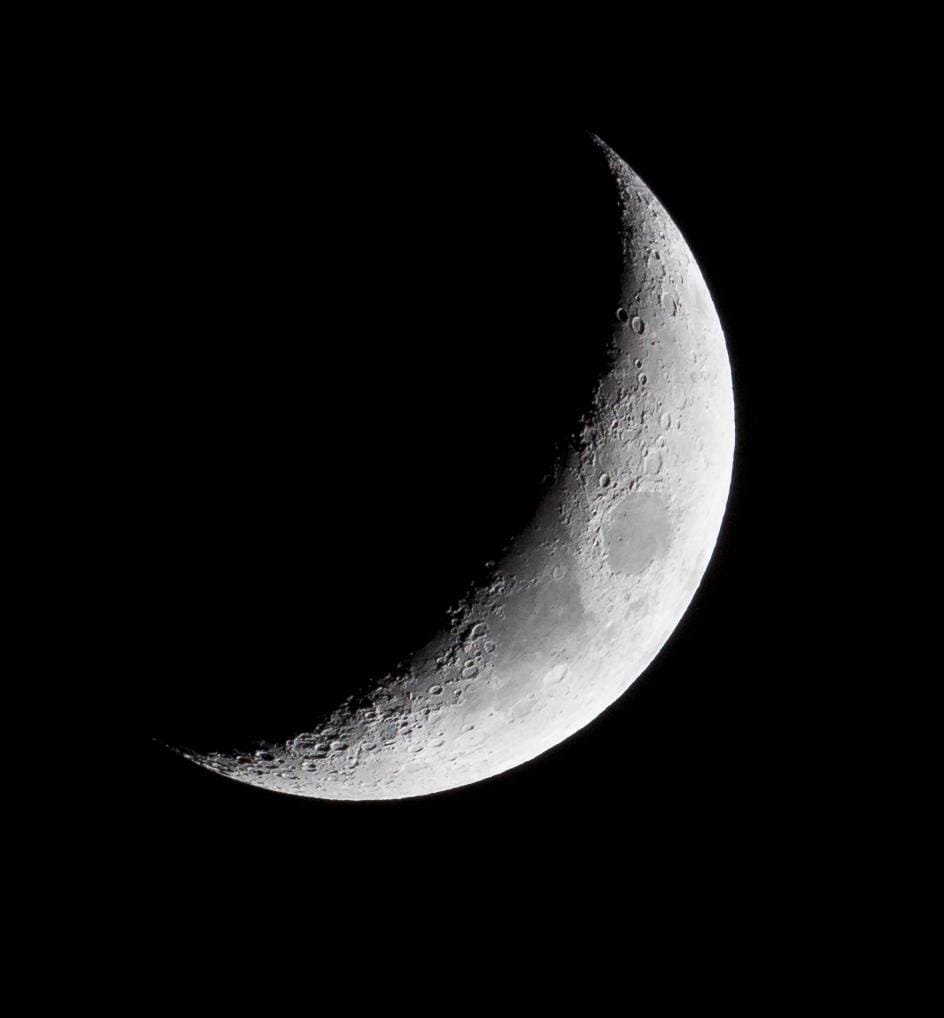
The image that summarises this year for me is this crescent moon taken by my partner, Björn.

As opposed to the full Moon when the moon is reflecting the light of the sun and is bright and luminous to us here on Earth, in the waxing crescent phase, the moon is only starting to becoming visible to us.

This is how this year felt like to me - incubating, being in the dark of the moon, turning more inwards, journeying more internally and through knowledge rather than being out in the world.

And like the moon and nature, I believe life also goes through cycles - it isn’t a linear path of progression we often imagine, and we aren’t static beings who aren’t supposed to change.

This year really taught me the importance of embracing whatever cycle we are in even if it doesn’t make rational sense or fit our image of ourselves. To allow ourselves to be changed by it.

So for this coming year, perhaps we can stay open up to whatever cycle or phase we may be in, to flow with it rather than resist it, and to stay open and curious to where this may lead us.

Thank you for being part of my 2022. And here’s to flowing with whatever 2023 brings.

May what I do flow from me like a river, no forcing and no holding back.
— Rainer Maria Rilke

Control vs Power

I can’t let go or things will fall apart.

I need to be on top of everything.

Things have to be a certain way for me to be OK.

If I don’t do things myself, nothing will happen.

If I am careful enough, I should be able to prevent bad things from happening.

If I keep my life small and avoid certain situations, I won’t need to deal with difficulty.

What do all these statements have in common?

Control.

Control is something we tend to glorify. We admire people who seem to have their lives together. We think we should be able to control nature. We try to control our bodies by pushing ourselves beyond our physical limits.

Yet if we look behind the scenes of control what we often find is a profound sense of powerlessness. We find a deep anxiety about letting things happen, about letting ourselves happen without control, because we are scared that if we do, we won’t be able to handle the consequences.

So underneath control there is often a sense of feeling small and helpless in the world, a deep anxiety around:

I am not ____ (insert) strong enough / powerful enough / competent enough / smart enough - so I need to control things as this is the only way to deal with life.

Often this need for control comes from not having been able to feel an age-appropriate sense of agency in the world around us as children, perhaps because we were expected or forced to be more ‘powerful’ than was appropriate for our age (for example by taking care of a parent’s emotional needs, caretaking siblings, having to be self-sufficient or needless). Alternatively, our power or sense of agency might have been crushed by parents who were overprotective or controlling and we weren’t able to do age-appropriate tasks or face difficulty which would have given us the confidence of being able to handle what happens in life.

So either because we were faced with too much or not enough agency at a young age, the result is a deep down feeling of being unable to have an impact on the world around us. And what better way to avoid feeling this sense of powerlessness than to turn to control instead? Because if I can control all the variables, I can avoid needing to face my perceived limitations or deepest fears.

As Jungian author David Richo writes:

Control is the poor man’s version of power.

So control steps in as a way of compensating, of helping us feel less small and powerless. For example:

I feel like an imposter in this job so I have to work extra hard and control how everyone sees me so they never find out.

What’s so bad about control? Well, nothing if it works for you. And it usually does to a certain extent, or at least it does until it doesn’t anymore.

Because when we are moving from control we are not really making choices about what is best for us, about what we truly believe in. When we are moving from control, our focus is usually on avoiding a certain outcome or anxiously needing to ensure an outcome in order to feel OK.

We are constantly moving, but moving in an attempt to get away from something instead of moving towards something that is important to us, like a rabbit who is simply running away from a fox instead of moving towards food.

This doesn’t leave a lot of room for spontaneity, authentic expression, connection or living in a more whole hearted way, in line with our values.

It also doesn’t leave a lot of room for us to step into our power or sense of agency.

I see authentic power or agency or authorship as the ability to have an impact on the world around us, on people around us. I am not thinking of it in the way it is often seen, as power over others, as abuse of power or domination.

As researcher and author Dacher Keltner writes:

Power is the medium through which we relate to one another. Power is about making a difference in the world by influencing others.

I don’t think we can really step into our power and have an impact on the world and people around us and be fully in control at the same time.

Yet they are similar in some ways.

That feeling of powerlessness deep down that leads to control is not totally wrong. There are situations and aspects of life that we cannot change. This is true. It is part of the human condition. We are small and we are to a large extent powerless in the face of many things in life like sickness or death or loss.

Yet this is not the whole truth, either.

Because there are also things we can change and that we can take responsibility for. We are not totally powerless the way we might have felt as children.

The response to this is not a compensatory ‘I should be able to control everything’ that most of us have.

It’s holding BOTH realities at the same time, and being able to distinguish where and when we can have an impact and when and where we cannot. This can sound like:

I am powerless to change certain situations in life AND I can also choose certain things, like how I respond to them.

This is the idea of response-ability: The ability to choose how we respond even to situations we are not responsible for creating.

Moving from control into authentic power also involves trust: Trust in ourselves, trust in other people, trust in life.

I believe that the key to letting go of control and moving into power is to authentically be able to get to a place of:

SELF-TRUST: Whatever happens, I will handle it

TRUST IN OTHERS: Whatever happens, I am supported.

TRUST IN LIFE: Whatever happens, maybe it is meant to happen for my greater good, even if I don’t fully understand how yet.

I don’t think we need to trust all three at the same time. But we do need to trust at least one.

As Steve Jobs said:

You can't connect the dots looking forward; you can only connect them looking backwards. So you have to trust that the dots will somehow connect in your future. You have to trust in something - your gut, destiny, life, karma, whatever. This approach has never let me down, and it has made all the difference in my life.

(I know that Steve Jobs was also very controlling. The irony is not lost on me! Yet I do feel he got this part right).

We can do our best and trust that even if things don’t work out the way we would like, we will find a way to deal with them, or even just that we will be OK. This is where we need to make friends with disappointment because it is an inevitable companion on the journey to authentic power.

We also have to be willing to lose. To fail. To make mistakes. In other words, in order to step into our authentic power, we have to be willing to be vulnerable. To be a messy human.

And I think if we can trust in something bigger than us, in some sort of fate or destiny, allowing things to happen without needing to over-control can even be a beautiful journey:

Once we understand that what happens beyond our control may be just what we need, we see that acceptance of reality can be our way of participating in our own evolution. - David Richo

Year in Review: 2021

Wow. What a year.

My experience of 2021 is that if you are not feeling burned out to some extent, are you even still alive?

Adam Grant’s word ‘languishing’ definitely captured the zeitgeist, a sort of ‘blah’ after the more crisis-type feel of last year.

For me personally, this was compounded by a complicated family situation that meant I needed to take more time off, go to Jordan twice this year, and take on very few new clients - resulting in often feeling I was letting people down, yet also knowing this was the best I could do.

Source: The New York Times

Yet even in the midst of crisis and languishing, I feel incredibly grateful for the work I do. Doing work that is meaningful and stimulating feels even more precious when other areas of life are more difficult.

Here’s a look back at some of the highlights and learnings of 2021.

Blogging etc

I’m excited to have participated in two new types of events for the first time this year. The first was a talk I gave on Procrastination for Creative Mornings Lausanne - an amazing organisation that hosts free events that I have been attending for years. It was a secret dream to maybe one day be a speaker, and I was very honoured when I got the request! You can watch the entire talk for free on their website.

Another dream was being on a podcast and I was thrilled to join Nicki and Tom on their podcast for professionals, Higher! We talked about feeling stuck in the work place and ways of approaching this. You can listen to this episode here.

I still love good old-fashioned blogging, even though I keep hearing about how nobody really reads anymore! My favorite blog post this year was I Am No Longer Who I Once Was about life transitions and awakenings and the key ages we tend to experience these. I based this on life transits from Astrology and also gave a talk to Webster University students on this theme, combining Astrology and Psychology.

I had long periods of not posting on Instagram and Facebook this year, mostly because I felt disillusioned with social media while simultaneously feeling I had nothing very helpful to share.

Welcoming Willow

The best thing to happen to me this year is adopting a kitten who I named Willow. Willow is no doubt a soul guide, and he has brought so much love, tenderness and joy to my life!

learning + going deeper

“Time is how you spend your love.” - Nick Laird

One of my biggest passions as a Gemini Sun is learning, and this year felt like it was about going deeper and consolidating rather than making new discoveries.

I completed my second year of Psychological Astrology training, and continued training in Coherence Therapy, working with a supervisor who uses this approach.

I also continued sessions with my Depth Psychology therapist who I have been working with for 2.5 years now. I really experienced how the deeper we explore our own psyches or internal villages, the more complex and messy and contradictory we realise we are - and at the same time, we may also learn to lovingly hold space for ALL these different parts of us.

This year for me has been about being even more with this complexity and messiness both within myself and in life in general; allowing the not knowing and the seeming contradictions.

I really saw this inability to be with complexity in the outer world. The inability to have real dialogues or conversations about the pandemic and other topics. The extreme views. The conspiracy theories on all sides.

I actually felt disillusioned with some members of the yoga / spiritual community I had felt a part of for the health privilege they showed, for their simplistic view of the world. One of the few voices that really spoke to me from this world is the newer work of Jeff Foster.

One of the benefits of this disappointment has been recognising how much we don’t know or understand about this pandemic or about life. Sometimes one thing can be true and the opposite can also be true. Sometimes we just don’t know and there are things that are out of our control. Being with this messiness, these contradictions, this helplessness feels so much more humbling and vulnerable yet honest than trying to pin it down in a simplistic way through black or white views.

We will become our opposite if we do not learn to accommodate the opposition within us. - C. G. Jung

Magic, Mystery and Meaning

As a child, I was obsessed with stories, hearing stories, reading stories. I loved myths and fairy tales. Anything magical fascinated me.

As a thesis for my Masters degree in Psychology, I wrote about the development of magical thinking to rational thinking and did a project on the symbolism of the mother figure in fairy tales.

Yet somewhere along the way, I adapted to the ‘real’ world, to practicality, to the more scientific approach. When I trained as a therapist, I needed more scientifically valid, behavioural approaches.

I feel this is an important part of my work, for it to be grounded and practical and founded. Yet at the same time, I have been feeling a calling for more Magic, Mystery and Meaning in my life and work.

Astrology is one of the ways that I can feel this strong pull towards something bigger than us that we cannot fully understand. More soul-based approaches such as the work of Carl Jung, James Hillman and Thomas Moore have also been resonating deeply.

For now, I feel these approaches are calling me on a personal level, and not something I am wanting to apply in my work straight away. I am allowing them to perculate and trusting that they will (and in some ways already do) show up as and when needed.

Something beyond life lives within life and calls the soul. - James Hillman 

2021 in an image

For me, this photo taken by my partner, Björn Rapp, symbolises this year: Trudging along, not really sure of where we are going in what feels like a never-ending journey, yet still moving forward in small steps. Not really sure of what to trust, or what has meaning anymore.

And I think what many of us are learning is that when we have no landmarks or outward signals of where to go, when nothing seems to make sense, we have to trust our inner compass more and more. What still has meaning to me? What small step can I still take?

And perhaps: How can I bring more magic, mystery and allow contradiction along the way?

Thank you for being a part of my 2021. May 2022 shine brighter for all of us.

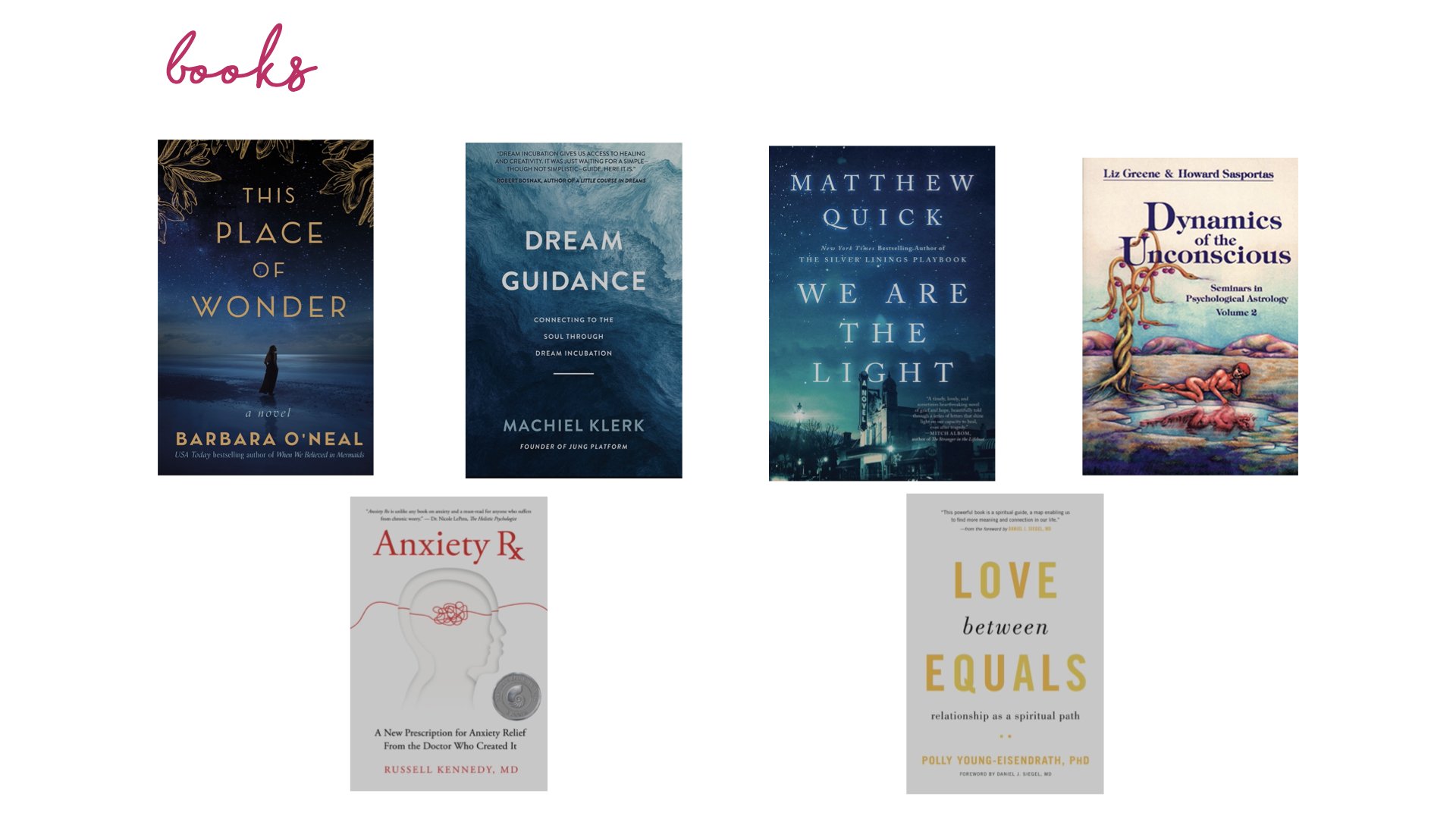
So many books, podcasts and TV shows really touched me this year - here are a few of my favourites:

The Wisdom of Disappointment

“We must surrender our hopes and expectations, as well as our fears, and march directly into disappointment, work with disappointment, go into it, and make it our way of life, which is a very hard thing to do.” - Chögyam Trungpa

If you’re like most humans, you’ve done everything possible to avoid feeling disappointment, perhaps even built your entire life around experiencing it as little as possible.

Perhaps you do one of two things: 

You keep your life small which means avoiding having hopes, dreams or expectations: 

I’m fine like this. I just want a simple life. I don’t want to want anything because then I’ll never be disappointed. It doesn’t really matter to me anyway:

If I don’t open my heart to anyone, then I won’t be hurt. 

If I don’t have ambition, then I never have to put myself out there and risk being disappointed.

As researcher and writer Brené Brown says, this is about choosing to live disappointed in a low grade kind of way rather than risk feeling disappointed in a bigger way at certain moments in life. 

The second possibility looks very different: Striving for perfection, in an effort to avoid failure and disappointment: If I do everything right, I’ll never make a ‘wrong’ decision so I’ll never have to feel disappointment.

Avoiding Disappointment

How does it make sense that we might have learned to protect ourselves from disappointment in these ways (and others)? Chances are, as a child, we experienced disappointment as extremely painful:

x Perhaps we were criticised by care givers or teachers when we did something wrong, and the feeling of being a disappointment felt unbearable. 

x Perhaps a parent’s disappointment in us was interpreted as there’s something wrong with me, I am not worthy, I will be abandoned - which felt unbearable.

x Perhaps our parents said something like: I’m not angry at you, I’m just disappointed and that cold feeling was even worse than anger.

x Perhaps we felt our parents’ disappointment in their own lives, not necessarily through words but through what we picked up on.

x Or perhaps we were disappointed by parents who couldn’t show up for us in the ways we needed them to when we were children.  

Even if experienced only once, it makes sense that we would come to the (unconscious) conclusion: It’s too painful to feel disappointed so I must avoid it in any way I can.

And so we built our internal villages to avoid ever feeling this ‘dangerous’ emotion again, even at a very high cost.

Yet what we resist, persists. Again, Brené Brown: 

“When we deny our stories and disengage from tough emotions, they don’t go away; instead, they own us, they define us.”

Being Willing to Feel Disappointed

Instead of being unconsciously ‘defined’ by avoiding disappointment, I want to suggest something that may seem counterintuitive: 

While never easy to feel, disappointment can actually be a very wise guide.

The etymology of the word disappointment comes from the old French desapointer: dis- reverse, opposite of + appointer - to appoint, which is a form of choosing. So literally the old French desapointer means to un-appoint or as I interpret it, to un-choose.

So I see the role of Disappointment Villager in our internal villages as simply telling us that something in our current reality is not working for us and that we may need to un-choose in some way. 

This un-choosing does not mean having to completely give up or let go. It isn’t an all or nothing thing. What it might be signalling is that something in our current reality has not worked out, and this could be an expectation, a belief, a dream, an ideal, a part of ourselves or a way of doing things.

Disappointment says nothing about our value as a human. In fact, if we are open to life, and fully experiencing the messiness of being human, if we are putting ourselves out there and opening our hearts, then disappointment is inevitable and unavoidable because we can’t control everything.

The Gap

Imagine walking along a path. At some point you look around and realise: This isn’t where I want to be. Something isn’t right.

There’s a gap between where you are and where you want to be, or had hoped to be.

Hello, Reality vs Expectation.

Allowing disappointment can look like: 

x Stop. Allow yourself to feel disappointed without resistance. After all, it is not your enemy, simply a messenger with some important information. Hello, Disappointment.

x Take stock of the current situation with curiosity (not judgement). What is this feeling telling me?

x Re-calculate: Un-choose what no longer works and re-choose what feels more aligned.

So disappointment steps in and helps us admit the current reality is not working in some way. It allows us to be honest about our reality IF we can avoid going into blame or wallowing, which can actually be a way of avoiding the more difficult task of taking responsibility.

It helps us take stock of the situation: What isn’t working for me here? What part of this am I disappointed about?

It helps us re-connect to values and re-calculate how to keep moving towards them, like a GPS: What does this tell me about what really matters to me? How else can I keep moving towards these values, perhaps in a different, more realistic way? Do I need to adjust my expectations? Do I need better boundaries or self-care? Do I need to admit that the current reality does not meet my needs and adapt in some way? Do I need to walk away?

Disappointment allows us to land in reality with a thump: This is where you are. Stop. Take stock. Re-evaluate.


Afterall, as Psychologist Les Greenberg says: "You can't leave a place until you've arrived."

By doing this, disappointment helps us re-shape reality in a way that can be helpful, it helps us figure out where we go next.

For example, disappointment may tell me: There is a gap between my desire for intimacy and connection and my actual relationship. This does not mean getting rid of my values around intimacy and connection. It does not even necessarily mean letting go of the relationship. When I can allow myself to sit with disappointment, I find that on the other side are creative solutions, new possibilities, new paths that I could not see before listening to disappointment.

So I might decide to do something different to create more opportunities for intimacy. I might talk to my partner. I might decide to look for this more outside the relationship. I might work on my own capacity for intimacy. I might question whether my expectations are realistic.

Disappointment is not the end of the path. It’s simply a necessary stop that can help us take stock, un-choose what doesn’t work and re-choose what feels more aligned. 

By being willing to feel disappointment instead of trying so hard to avoid it, we dare more, risk more, and open our hearts more - knowing that if things don’t work out, it’s OK.

When we can see disappointment as just information that can help us to un-choose and re-choose, we no longer need to build our lives in an attempt to avoid it.

A reality check

I think we all have unrealistic expectations of life, of ourselves and of other people, and this gap between our expectations and the reality of life and what it means to be a messy human can lead to a lot of unnecessary suffering.

David Richo outlines these five core challenges that we all face yet are often in denial of:

Everything changes and ends.

Things do not always go according to plan.

Life is not always fair.

Pain is part of life.

People are not loving and loyal all the time.

These are the core challenges that we all face. But too often we live in denial of these facts. We behave as if somehow these givens aren’t always in effect, or not applicable to all of us. But when we oppose these five basic truths we resist reality, and life then becomes an endless series of disappointments, frustrations, and sorrows.” - David Richo, The Five Things We Cannot Change: And the Happiness We Find by Embracing Them